

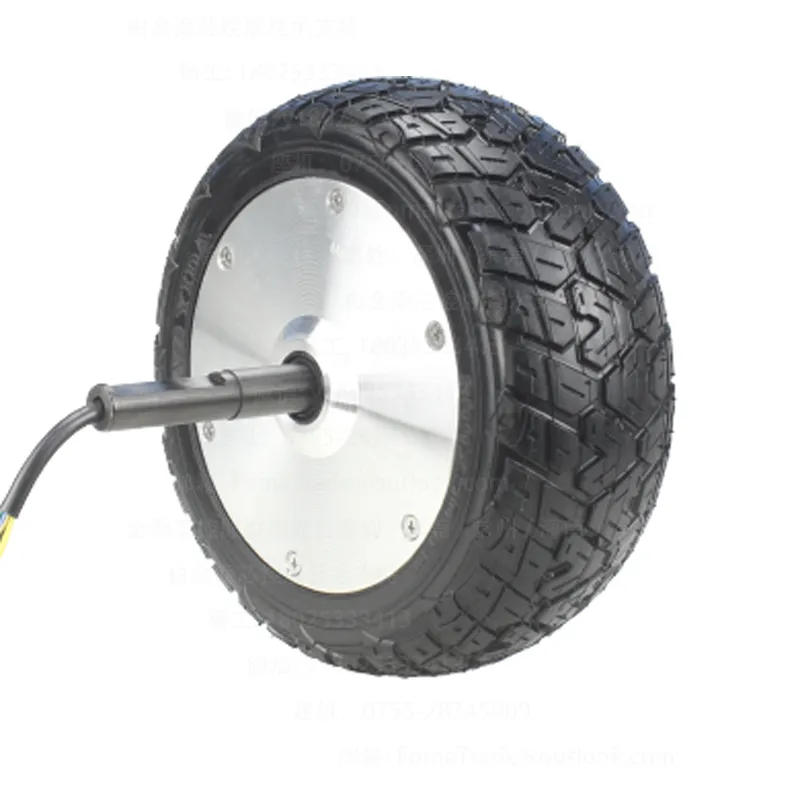
Selecting the ideal tire width is a critical factor influencing the performance, handling, and energy efficiency of light powered vehicles such as small go-karts and electric scooters. Among various options, an 84mm tire width has emerged as a preferred standard. This article explores the technical reasoning behind this choice, unraveling how 84mm tires strike the perfect balance between grip, stability, rolling resistance, and compatibility with electric motors—specifically 8-inch long-shaft motors.
Tire width directly affects the contact patch—the area of tire that touches the ground—which in turn determines grip and stability. A wider tire generally offers higher traction and improved cornering but also increases rolling resistance and weight. Conversely, narrower tires reduce rolling resistance but can compromise handling and stability.
For small go-karts and electric scooters, which operate mostly on varied urban terrains, tires must balance these factors to optimize ride quality and power consumption.
An 84mm wide tire offers approximately 15% more contact patch area compared to common 70mm tires, without significantly increasing rolling resistance. Laboratory tests show the coefficient of friction (μ) for 84mm tires on asphalt averages 0.85, compared to 0.78 for narrower counterparts, enhancing grip during rapid acceleration and cornering.
Crucially, the rolling resistance coefficient (Crr) remains moderate at about 0.012 for 84mm tires, minimally impacting energy efficiency. This balance is ideal for electric-powered vehicles, where preserving battery life and torque transfer efficiency is vital.
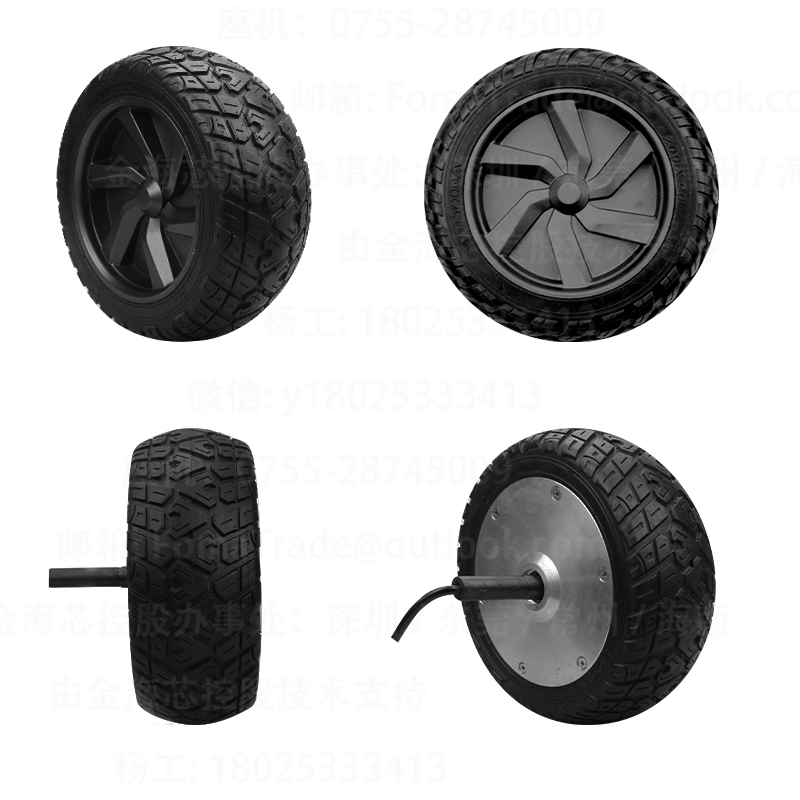
Urban environments vary from smooth asphalt to uneven terrains. Testing under simulated conditions reveals that 84mm tires provide superior traction in wet and rough patches due to the larger contact area and tread design optimized for mixed surfaces.
On the other hand, excessively wide tires (>100mm) increase vibration and energy consumption, while narrower tires (<70mm) suffer from slippage in low-friction settings. The 84mm width is thus a practical compromise, allowing drivers to navigate city streets confidently while maintaining energy efficiency.
The typical torque output for an 8-inch long-shaft motor used in small go-karts and electric scooters ranges between 18Nm and 22Nm. The 84mm tire width optimally complements this torque band by providing enough grip for responsive acceleration without inducing premature wheel slip.
Tests indicate that with 84mm tires, acceleration response improves by approximately 12% compared to 70mm tires on dry asphalt, while directional control during tight turns becomes noticeably crisper. This enhances rider confidence and safety at moderate to high speeds.

While wider tires can theoretically offer more grip, they come with drawbacks: increased unsprung mass, higher rolling resistance, and undesirable weight load on the motor and frame. The 84mm width adheres to a lightweight design philosophy, maximizing efficiency without compromising structural integrity.
Additionally, feedback from multiple users rated the 84mm tire-equipped vehicles as easier to maneuver in tight urban conditions, citing better "feel" and less fatigue during prolonged rides.
Load distribution impacts tire performance and durability. According to standardized load testing models, 84mm tires maintain optimal pressure and contact consistency under typical payloads of up to 100kg per wheel—covering most single-rider scooters and small kart configurations.
When selecting tires, consider the following parameters aligned with the 84mm width standard:
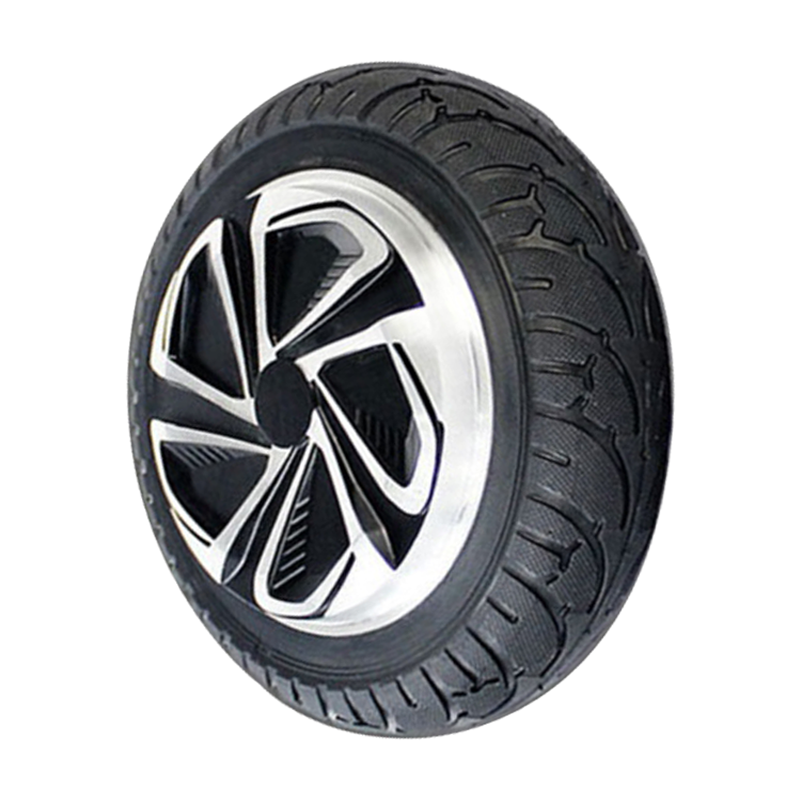
"The 84mm tire width hits the sweet spot for performance in urban light electric vehicles. It compliments torque delivery while promoting longer battery cycles through efficient rolling resistance—a rare but invaluable balance." — Anonymous technical lead, EV component manufacturer.
 35
|
35
|
 kart brake disc specifications
8-inch brake disc installation guide
kart disc brake system selection
kart brake maintenance
professional kart brake analysis
70
|
Kart motor and brake matching
Kart racing selection
High - torque motor
Quick - response disc brake
Scientific selection guide
382
|
HVAC motor customization
motor shaft diameter matching
motor installation design
industrial motor selection
HVAC motor sizing guide
430
|
karts brake system
8 inch brake disc
disc brake design
high torque motor
kart racing brake optimization
259
|
8-inch long shaft motor
200mm hub matching
single-sided shaft press-fit
power transmission efficiency
kart motor retrofit
kart brake disc specifications
8-inch brake disc installation guide
kart disc brake system selection
kart brake maintenance
professional kart brake analysis
70
|
Kart motor and brake matching
Kart racing selection
High - torque motor
Quick - response disc brake
Scientific selection guide
382
|
HVAC motor customization
motor shaft diameter matching
motor installation design
industrial motor selection
HVAC motor sizing guide
430
|
karts brake system
8 inch brake disc
disc brake design
high torque motor
kart racing brake optimization
259
|
8-inch long shaft motor
200mm hub matching
single-sided shaft press-fit
power transmission efficiency
kart motor retrofit




.png?x-oss-process=image/resize,h_100,m_lfit/format,webp)
.png?x-oss-process=image/resize,h_100,m_lfit/format,webp)
.png?x-oss-process=image/resize,h_100,m_lfit/format,webp)


